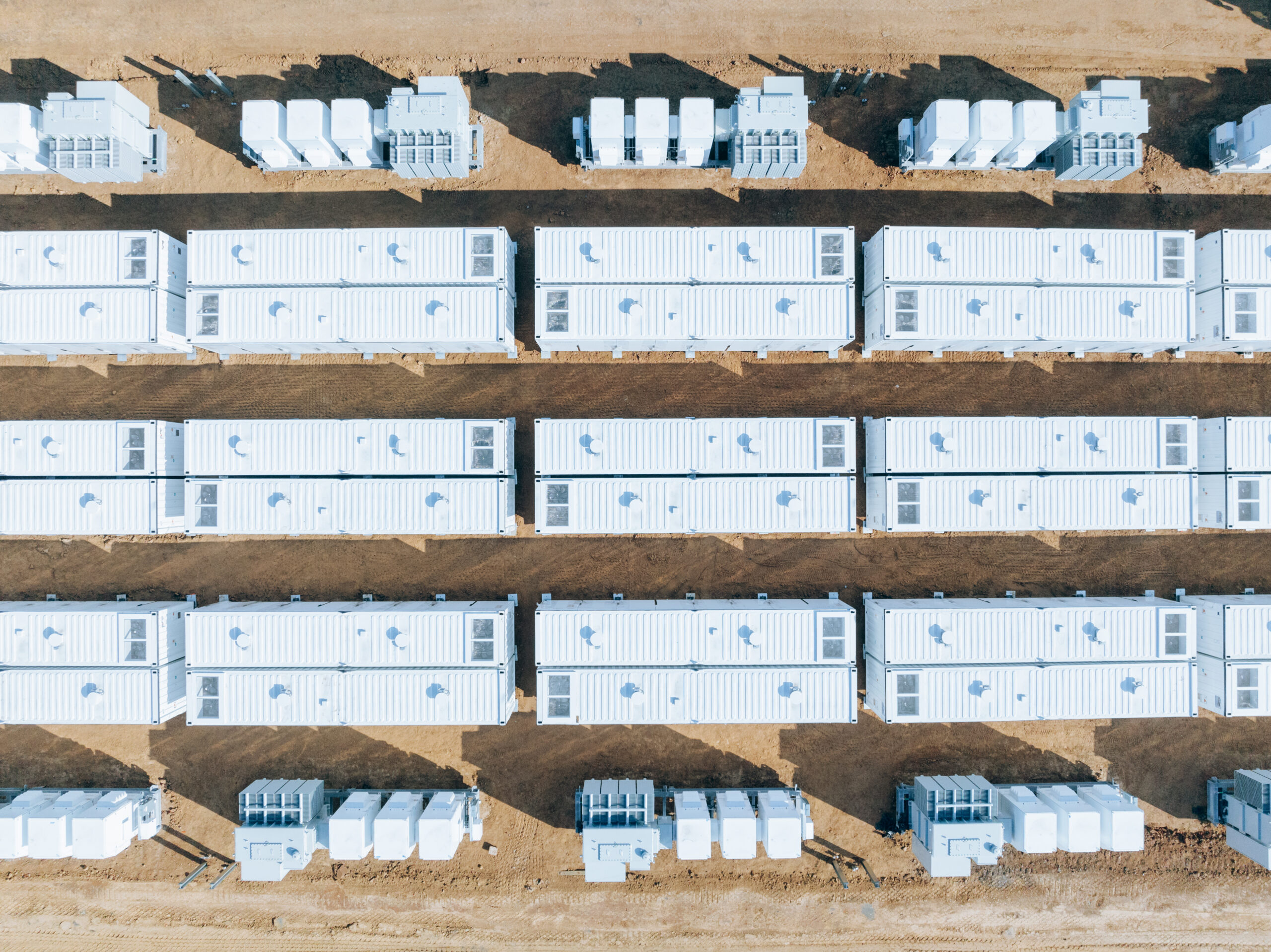
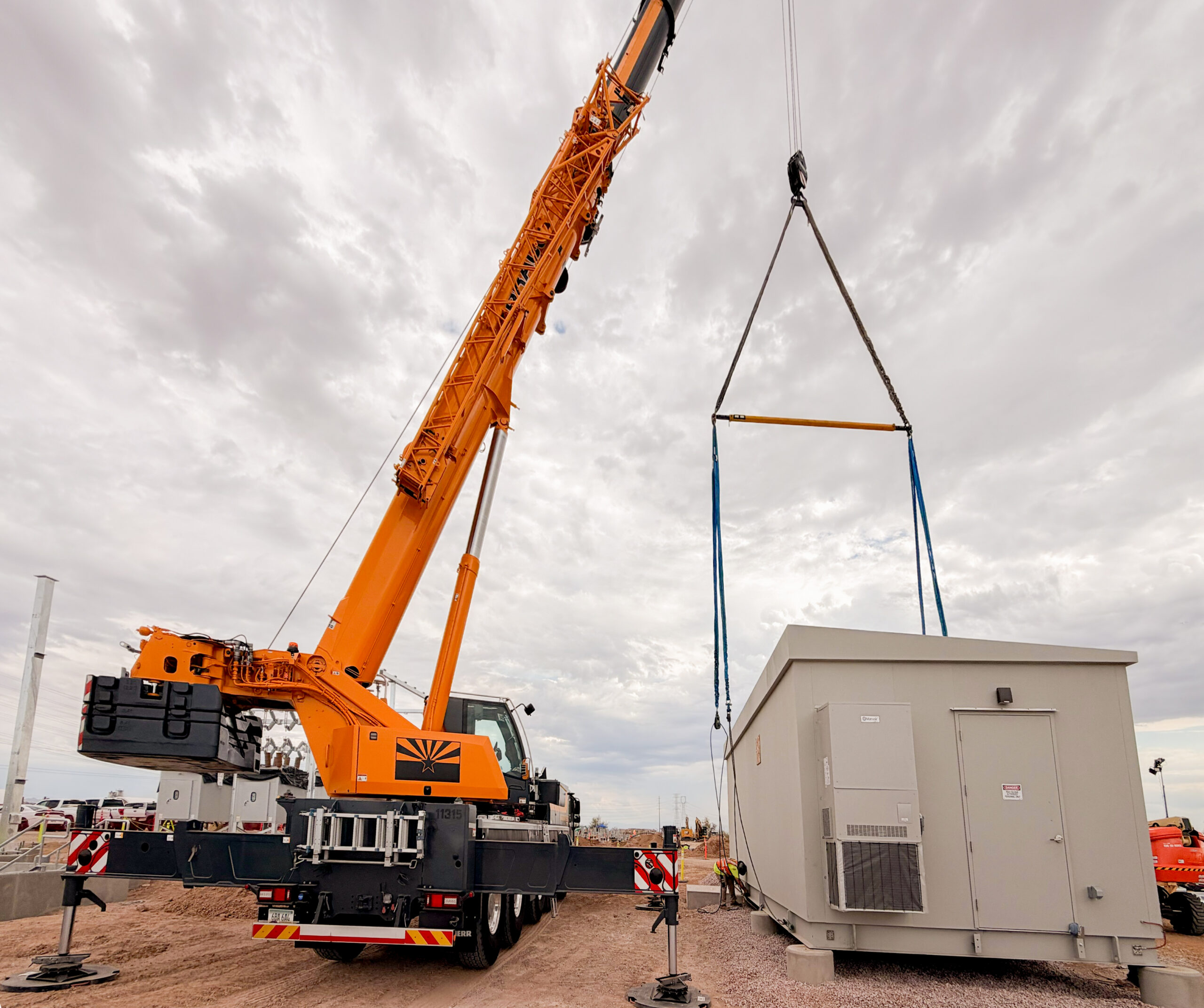
The US is expected to install 24,000 MW of new utility-scale battery capacity this year, which is a 60% increase over installations last year. This is almost double the global growth rate. FEOC, tariffs and local concerns about fire risk do not seem to be holding batteries back. What is the key to separating spreadsheet optimism from what is actually bankable?
Five battery company CEOs talked about these are other topics at our 35th energy finance conference outside San Francisco in mid-June. The five are Brian Hayes, CEO of Key Capture Energy, Bailey McCallum, CEO of Goshe Energy Storage, Julian Nebreda, CEO of Fluence, Chris Taylor, CEO of GridStor, and Andrew Waranch, CEO of Spearmint Energy. The moderator is Caileen Kateri (Kat) Gamache with Norton Rose Fulbright in Houston.
Rapid Growth
MS. GAMACHE: Last year, the main question for the battery storage panel was whether storage could survive FEOC and blistering tariffs. A year later, the question is whether we are in the midst of a battery gold rush. Chris Taylor and Andrew Waranch, tell us about your past year and whether you are screaming “Eureka!”?
MR. TAYLOR: There has been quite a change in the past year. We have seen the headwinds from the Trump administration moderate. There are still headwinds, but the tailwinds of exponential growth in demand and the need for capacity that can be deployed quickly are more than offsetting the federal policy headwinds.
We have grown our company by about a third in terms of headcount in the past year. We will more than double our operating projects this year and expect to do that again next year, and we are seeing a lot of opportunities in the M&A market. We just closed our fifth acquisition in the last year and a half, and we have about 3,000 MW of projects in advanced stages or under construction. We see a strong growth trajectory for the next few years, driven by the fact that storage is the leading source of near-term capacity.
MR. WARANCH: I agree. I describe us as post-hype. In 2020, batteries were the hot new thing. You had a lot of time, effort and money thrown at them, which was great, but projects take three to 10 years to get through the queue and there was regulatory uncertainty.
As we get into 2026 and look ahead to 2027, we see an enormous number of projects coming out of the interconnection queue. The sizzle has passed. We are in the real steak. There is going to be a solid construction boom for the next decade.
MR. NEBREDA: I agree. I wouldn’t call it a gold rush in the sense that we are looking for a mine. We already have the mine. It has taken a tremendous amount of work to change our supply chains and bring them to the US to be able to deliver batteries that pass muster under FEOC and to get a new product ready that can adapt to data centers and the speed and other things that they need. We found the mine. We built it. I think it is ready now to start producing.
MS. GAMACHE: Brian Hayes and Bailey McCallum, welcome to the club. How are you feeling about the industry outlook?
MR. HAYES: Very good. I have been at Key Capture for two and a half years. Until about a year ago, my kids would ask me how things are going, perhaps out of nervousness.
Things have changed in the last year in terms of demand. Utilities are recognizing how battery energy storage fits from an accredited capacity standpoint. That alone has unlocked tremendous opportunities.
Time frames have also changed. On the supply side, the battery manufacturers have responded to FEOC concerns and have been good at working through them.
MR. MCCALLUM: Any question about a gold rush suggests there may be an element of irrational exuberance. Are we in a battery gold rush where we are overbuilding? I don’t think we are because of the escalating demand for capacity. We are the maker of picks and shovels and supplier to that gold rush for capacity. We are in a really strong spot as an industry, bringing a lot of projects out of the queue. I expect to see a further maturing in a significant way over the next year and a half.
MR. TAYLOR: Many of us are experiencing a shift away from heavy reliance on merchant revenues from arbitrage and ancillary services, which was the dominant revenue source in the early days in both ERCOT and to a lesser extent CAISO, to long-term contracted revenue, whether that is through investment-grade utility offtake or well-capitalized hyperscalers. That creates a much more stable foundation for long-term growth and investment than the more market-facing merchant model.
MR. HAYES: I view storage as a service for the grid. If storage continues to try to go after arbitrage, we will kill ourselves. Storage is needed for the grid to operate reliably.
MR. WARANCH: I gave a lecture for more than 25 years that power is the most unique commodity because you have to produce and consume the same amount at the same time. What is lost in some of the minutiae is that the entire power trading industry changed with storage. We used to be all about probability of $5,000 spikes and running out of power. You don’t have that in corn because you have silos. You don’t have that in metals because you have warehouses. Power never had that.
We are in the midst of a transformation across every ISO, every utility and every corner of America. Storage is needed everywhere, and it will require at a least a decade-long buildout, regardless of everything else that is happening.
Read the full article here.